
Hospital Energy Management UK

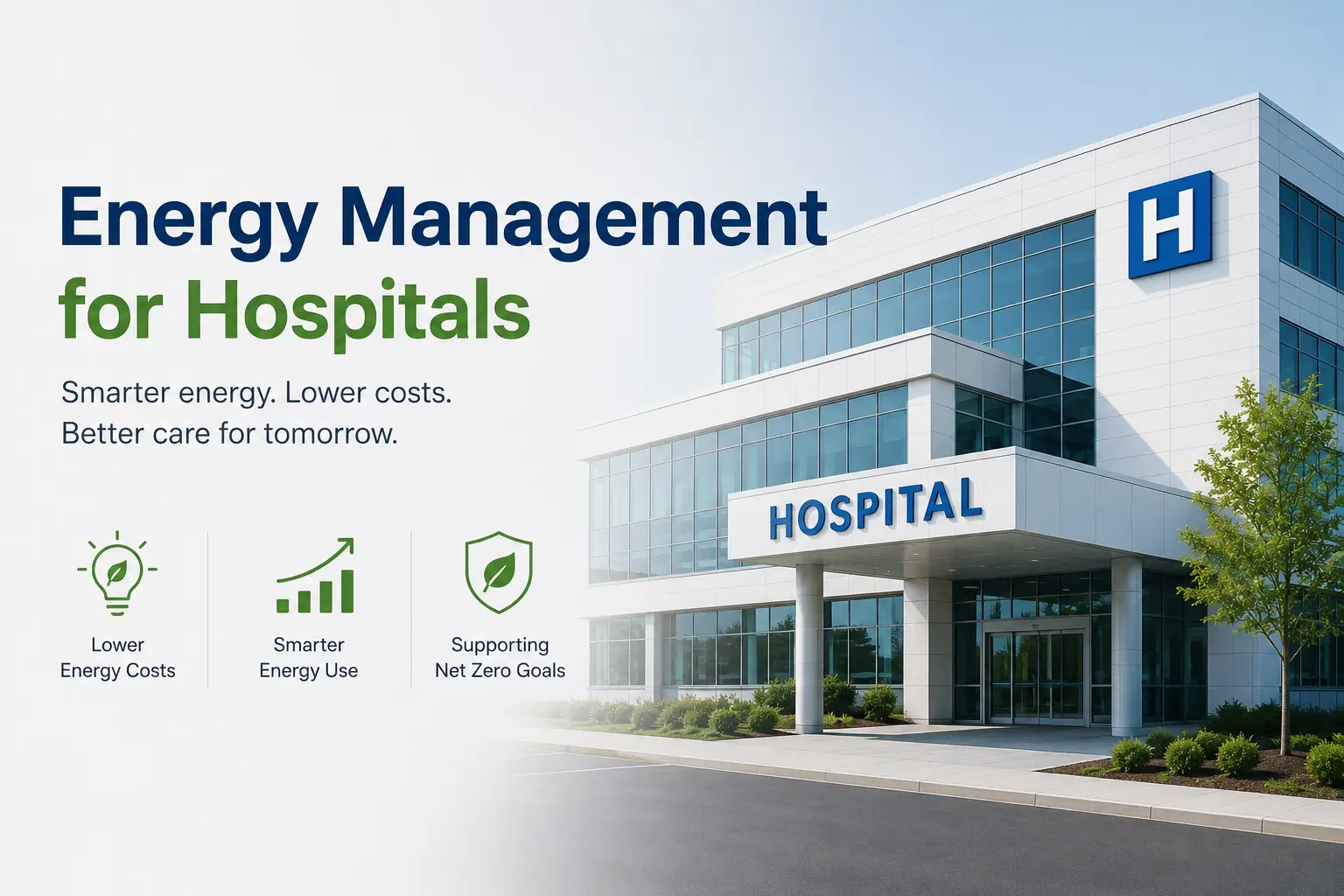
Hospitals are some of the most energy-hungry buildings in the UK. They run 24 hours a day, seven days a week — which means the energy bills never stop. Whether you manage an NHS trust, a private hospital, or a network of care facilities, keeping utility costs under control is one of the most pressing financial challenges you face.
At Lloyd Energy, we help healthcare organisations across the UK compare suppliers, switch to better tariffs, and build smarter energy strategies without the jargon.
Why Do Hospitals Pay So Much for Energy?
The NHS spends an estimated £500 million on electricity alone every year. From ventilators and MRI scanners to 24-hour lighting, heating, sterilisation, and catering, energy demand is constant and complex. Hospitals typically use around 2.5 times more energy per square foot than standard commercial buildings, and combined with ageing plant or poorly matched contracts, many sites end up paying well over market rates.
| Key Healthcare Energy Fact | Benchmark Figure |
|---|---|
| NHS annual electricity spend (est.) | £500 million+ |
| Energy use vs. standard commercial buildings | 2.5x more per sq. ft. |
| Average gas use per sq. ft. per year | ~109 cu. ft. |
| Average electricity use per sq. ft. per year | 27.5 kWh |
| NHS Net Zero target (direct emissions) | 2040 |
How Lloyd Energy Helps Healthcare Organisations Save on Energy
The right supplier on the right contract structure can make an immediate budgetary difference. We make it simple to compare energy prices across commercial suppliers and secure terms tailored to healthcare estates.
Compare Business Electricity for Hospitals
Diagnostic equipment, server rooms, theatres, and 24/7 ward lighting drive heavy baseload electricity demand. Our business electricity comparison service lets you benchmark competitive rates cleanly. You can also review major UK business energy suppliers side by side.
Get a Better Deal on Business Gas
Gas underpins critical healthcare operations — from continuous hot water and ward heating to laundry and commercial kitchens. Use our business gas comparison service to review live commercial deals, or check current business gas prices to forecast estates budgets accurately.
Practical Ways to Reduce Hospital Energy Costs
Switching supplier tackles unit price; pairing it with operational controls cuts wasted kilowatt-hours across every wing:
- Conduct an estates energy audit — Identify legacy boilers, compressed-air leaks, and continuous-run pumps drawing out-of-hours power.
- Upgrade to high-efficiency equipment — Replace dated lighting with commercial LED panels, occupancy sensors, and A-rated refrigeration plant.
- Right-size HVAC systems and air handling fans — Match airflow and heating schedules to actual clinical and administrative occupancy hours.
- Sub-meter and monitor usage by department — Track kWh spikes in kitchens, radiology, and theatres in real time via AMR or Half-Hourly metering.
- Review your tariff structure ahead of renewal — Avoid automatic rollover or deemed rates by benchmarking 6–12 months before contract expiry.
Supporting NHS Net Zero Goals
The NHS has committed to reaching Net Zero for emissions it directly controls by 2040. Active hospital energy management sits at the heart of this target — pairing certified green electricity tariffs with practical efficiency upgrades delivers measurable, reportable carbon reductions.
Lloyd Energy can audit your current business energy bills to uncover non-commodity cost savings and demand charges. If your estate uses older gas-powered systems and is assessing decarbonisation pathways, explore our gas conversion options as well.
Get Your Healthcare Energy Quote Today
No bill? No problem. Call our team with just your postcode and organisation name. Our consultants have access to the national supply database and can locate your MPAN and MPRN on your behalf — for free, with no obligation.
For Quick QuoteFrequently Asked Questions
A typical hospital uses around 27.5 kWh of electricity and 109 cubic feet of gas per square foot per year. Larger critical care sites will use considerably more, particularly where equipment runs continuously.
Yes, and it is one of the fastest ways to reduce costs. Many healthcare organisations are on default or out-of-contract rates that are significantly higher than the best available market deals. Switching takes a matter of weeks and requires no service interruption.
Most hospitals benefit from fixed-rate contracts that provide cost certainty over 12–36 months. Our guide on business energy tariffs and contracts explains which options suit always-on, high-usage healthcare organisations.
Yes. We work with healthcare providers of all sizes, from single-site GP surgeries to multi-site private hospitals and NHS trusts. Our comparison and advisory service is free to use with no obligation.